
A WireFlow Bifrost Aftermarket & Refurbishment solution for a leading global automotive manufacturer
The Challenge
As the automotive industry transitions to electric mobility, manufacturers face increasing pressure to manage the lifecycle of EV batteries responsibly. A leading global automotive manufacturer needed a solution to support its Battery Repair and Reuse Centres worldwide, which services warranty claims and refurbishes battery packs for reuse. The challenge was to find a system that could:
– Handle many different types of battery modules ranging from low to high voltage levels with different capacities.
– Diagnose and prepare new modules for assembly into battery packs.
– Ensure safe handling of high-voltage components.
– Comply with transport regulations.
– Provide traceability for warranty and regulatory documentation.
– Integrate seamlessly into daily operations and service workflows.
The company required a flexible, scalable, and safe system that could be used by trained personnel across multiple stations, while maintaining high standards of automation and data integrity.
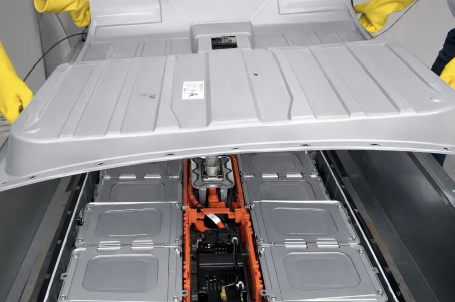
Figure 1 –EV Battery pack cover removal
The Solution
WireFlow delivered the Hållö system, a customized version of the WF Bifrost Battery Test & Measurement platform, tailored to the manufacturer’s operational and safety requirements. The system supports both daily refurbishment workflows and warranty-related battery pack replacements enabling fast turnaround and reliable diagnostics.
A key capability of the Hållö system is its precise control of cell voltages and charge/discharge parameters ensuring modules are conditioned to the exact levels required for seamless pack assembly. By tightly controlling individual cell voltages, monitoring temperature behaviour, and executing highly accurate charge/discharge cycles, the system ensures that each module fulfils the requirements and reaches the exact voltage level required before assembly. This precision is essential for maintaining pack balance, securing long‑term battery health, and enabling the customer to perform fast, high‑quality pack repairs that meet automotive‑grade reliability requirements.
The Hållö system is a three-channel distributed setup capable of handling modules up to 200V with a charge/discharge current of 100A for fast operation. With cell-level monitoring and temperature sensing supporting a wide variety of sensors, it ensures safe operation and modules to be perfectly balanced to be assembled into the battery pack. It is designed to be modular, scalable, and safe, with wall-mounted Connection Nodes that streamlines the workspace and workflow.
The system supports these core operations:
– Voltage Matching: Aligns module voltage with the target pac
– Transport Discharge: Discharges to <30% SOC for safe transport.
– Maintenance Charge: Charges to ~30% SOC for optimal storage.
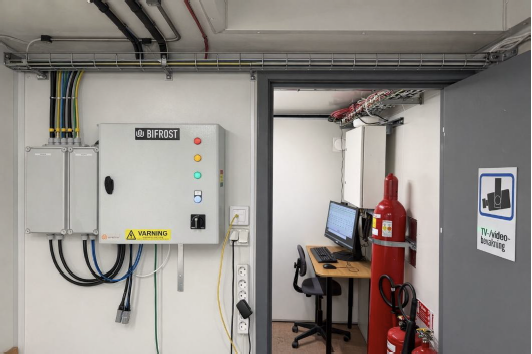
Figure 2 – WF Bifrost Connection Node and operator PC
Flexible
The Hållö system is designed to operate across multiple stations simultaneously, allowing several modules to be processed in parallel. Each station is equipped with a Connection Node containing contactors, relays, and measurement equipment, enabling safe and efficient setups.
A key feature that makes Hållö exceptionally flexible is its use of module definitions, or recipes. These definitions allow the system to adapt dynamically to a wide variety of battery types, chemistries, configurations, and voltage levels. Each recipe includes parameters such as:
– Barcode identifier
– Number of cells
– Cell arrangement (series/parallel)
– Cell voltage limits (min/max/delta)
– Temperature sensor specifications
– Temperature limits
– Cutoff current and grace timeout for fine-tuned operations
By first scanning the barcode on the connection node and then the battery module, the system automatically loads the correct recipe for the corresponding station ensuring that all operations performed within safe and optimal parameters. This enables Hållö to support a wide variety of batteries and future-proof operations as new battery technologies emerge.
Operators authenticate, which can be done via fingerprint reader, and access is role-based:
– Restricted personnel: Low-voltage modules only (<50V).
– Trained personnel: Full access to high-voltage modules.
– Superusers: Add and modify different battery definitions
The system adapts to different module types and workflows, making it ideal for both routine refurbishment and warranty handling.
Scalable
The manufacturer required a solution that could be deployed across different work environments and scaled as needed. The Hållö system’s modular architecture allows for easy expansion, with each Connection Node operating independently and communicating with a central control unit. WF Battery Test & Measurement
AB0005-151, rev A www.wireflow.se
The system supports barcode scanning for module identification and cell-level diagnostics, enabling precise control and monitoring. It can be integrated into larger production systems or operated as a standalone solution.
Safe
Safety is built into every layer of the Hållö system:
– Real-time monitoring of cell voltages and temperatures.
– Automatic aborts on safety violations (e.g., overheating, voltage deviation).
– Wrong polarity detection and quick-stop switches.
– Role-based access control to prevent unauthorized handling.
Before any operation begins, the system verifies:
– Correct connection and polarity.
– Valid temperature sensor readings.
– Voltage levels within expected range.
If any parameter exceeds safe limits, the system halts the process and alerts the operator.
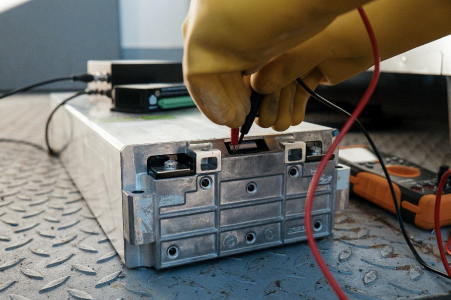
Figure 3 – Cell voltage measurement before installing the WF 5218 cell monitoring node with EtherCAT gateway
Automated and traceable
Automation and traceability are key features of the Hållö system. All operations are logged with:
– User ID
– Module ID
– Operation type
– Measurement data
In addition to logging, the system can export information such as individual cell voltages and other critical measurements to adjacent systems for quality assurance, analytics, and warranty compliance. This ensures that all processed modules have a complete and auditable digital history.
The system integrates the MQTT protocol for real‑time monitoring and alerts, allowing operators to work elsewhere while modules are being processed. Instant notifications let them react quickly to errors or completed operations, reducing downtime and improving throughput. This also minimizes unnecessary movement between stations and increases safety by reducing time spent near active high‑voltage equipment.
Unified workflow
The Hållö system enables the manufacturer to manage both warranty repairs and daily refurbishment workflows within a single unified process. By using the same interface, module definitions (recipes), safety logic, and traceability framework across all operational tasks, there is no need for separate tools or procedures for different battery types or use cases. This reduces training requirements, increases process consistency and ensures that every module, whether prepared for reuse, storage or transport, is handled according to the same validated and documented methodology.
Conclusion
The Hållö system is today in operation both in Europe and North America and provides the manufacturer with a unified and future‑proof platform for managing the diverse and evolving landscape of EV battery modules. By combining flexible module definitions, scalable architecture, robust safety mechanisms and comprehensive traceability, the system enables efficient handling of both daily operational tasks and warranty‑related workflows.
Hållö ensures that every battery module is processed consistently, safely, and in full compliance with internal and regulatory requirements. This allows the manufacturer to maintain high quality service, reduce operational complexity, and support the long‑term sustainability of its electric vehicle fleet.
The system includes an independent alarm function that runs in the background, which monitors variables selected by the user and compares them with userdefined limits. If a value is outside the limits, the system is put in a safe state (PSU disabled and contactors disengaged). Thus, if a test sequence is running, it will be halted. Alarm limits can be set individually per battery pack and the failure of any one pack won’t affect the others.
The alarm function can also be used to configure OVP (Over Voltage Protection), UVP (Under Voltage Protection), OCP (Over Current Protection) and UCP (Under Current Protection) for each battery pack.